

3 October 2026 · 2 min read
Starting with acrylics: what you actually need (and what can wait)
A no-nonsense first kit for acrylic painting: six colours, three brushes, one surface, and the mediums worth buying on day one. Built from the questions we hear most often in the store.
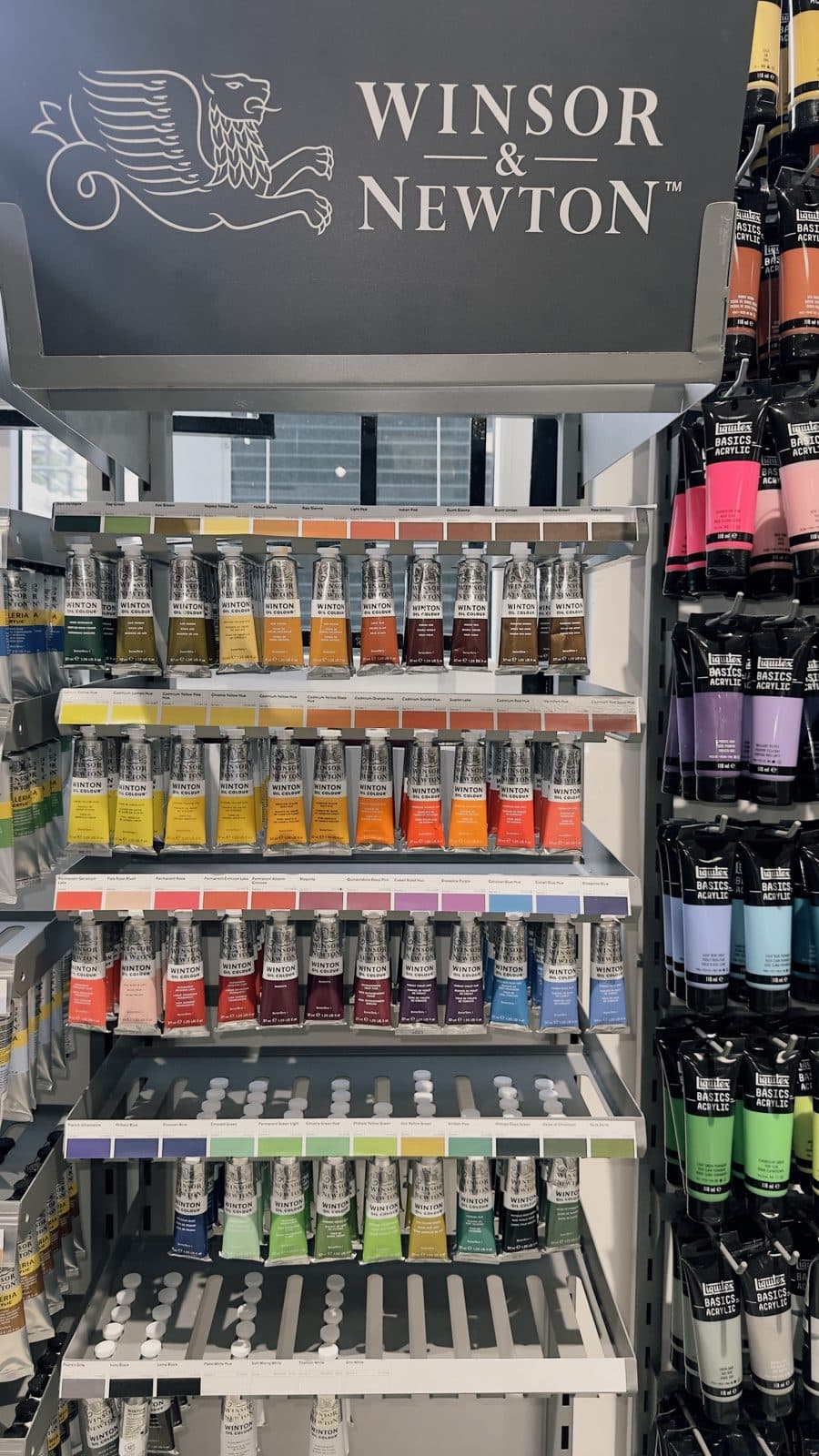
"Where do I start?" is the question we hear most. Acrylic is the right answer for most people who ask it: it dries fast, cleans up with water, sticks to almost anything and forgives mistakes because you can simply paint over them.
Here is a first kit that will not waste your money.
Six colours, not twenty-four
A big set looks generous, but you will use five of the colours and let the rest dry out. Buy these six tubes instead and mix everything else:
- Titanium white (the biggest tube you can afford)
- Cadmium yellow or a hue version
- Cadmium red or naphthol red
- Ultramarine blue
- Phthalo blue or cerulean
- Burnt umber or raw sienna
Camlin's artist range is the sensible starting point. Daler Rowney System3 and Winsor & Newton Galeria give you better pigment load for a little more. Liquitex Basics is the student line most art schools recommend. If you want to feel the difference, buy one heavy-body professional tube (Liquitex, Winsor & Newton Professional) in a colour you use constantly, such as white, and compare.
Three brushes
- A flat, size 8 or 10 for blocking in shapes and backgrounds.
- A round, size 4 or 6 for detail and line.
- A filbert, size 6 for soft edges and shapes that are neither square nor round.
Synthetic bristle is correct for acrylic. Natural hog hair gets ruined by water. Princeton, Mont Marte, Daler Rowney and Camel all make good synthetic sets. Keep the brushes in water while you work and never let acrylic dry in the ferrule.
One surface
A canvas board or a pad of acrylic paper is the cheapest way to make your first twenty paintings. Stretched canvas feels more serious and is wonderful once you have something you want to keep. Picasso and our own Charco canvases come primed and ready.
The two mediums worth buying on day one
Slow-drying medium / retarder is the one addition that changes acrylic from frustrating to pleasant, especially in Bengaluru's dry afternoons when paint on the palette can skin over in minutes. Gloss or matte varnish protects the finished painting and evens out the surface. Everything else (gels, pastes, pouring medium, flow improver) can wait until a specific painting asks for it.
Palette, water, rag
A stay-wet palette is a luxury; a ceramic tile or a sheet of greaseproof paper taped to a board works fine. Two jars of water (one to rinse, one clean), and an old cotton cloth, complete the kit.
Bring this list in and we will put it together on the counter for you, or tell us your budget and we will build the kit around it.